
A VR Headset plays a central role in how people enter and interact with immersive virtual spaces. In the Metaverse category, it acts as the main gateway that connects users to shared digital environments. Through this device, users can explore simulated worlds, attend virtual events, and interact with others in real time. As interest in immersive technology grows, understanding how this tool works becomes more important than ever.
This article explains the meaning of a VR Headset, where it came from, and how it fits into the wider Metaverse ecosystem. You will also learn about its core components, common types, and practical uses. Along the way, the guide highlights benefits, limits, and real-world applications. By the end, readers will have a clear and simple understanding of how this technology shapes modern virtual experiences and why it continues to gain attention across industries.
What is VR Headset?
A VR Headset is a wearable device that places users inside a computer-generated environment. It covers the eyes and displays 3D visuals that respond to head movement. As a result, users feel present inside a simulated space rather than viewing it on a screen.
The main purpose of this device is immersion. By blocking out the physical surroundings, it allows users to focus fully on a digital world. Sensors inside the headset track motion and adjust visuals in real time. This process creates a sense of depth and realism that standard displays cannot provide.
Within the Metaverse, this technology acts as a bridge between physical reality and virtual interaction. Users can explore environments, manipulate objects, and communicate with others through avatars. While some systems also support Augmented features, the core function remains full immersion. As industries demand stronger Digital skills, this tool continues to support learning, entertainment, and collaboration in virtual spaces.
Background of VR Headset
The design of a VR Headset combines hardware and software working together. Each part plays a role in delivering a smooth and realistic experience. Although models vary, most devices share similar elements.
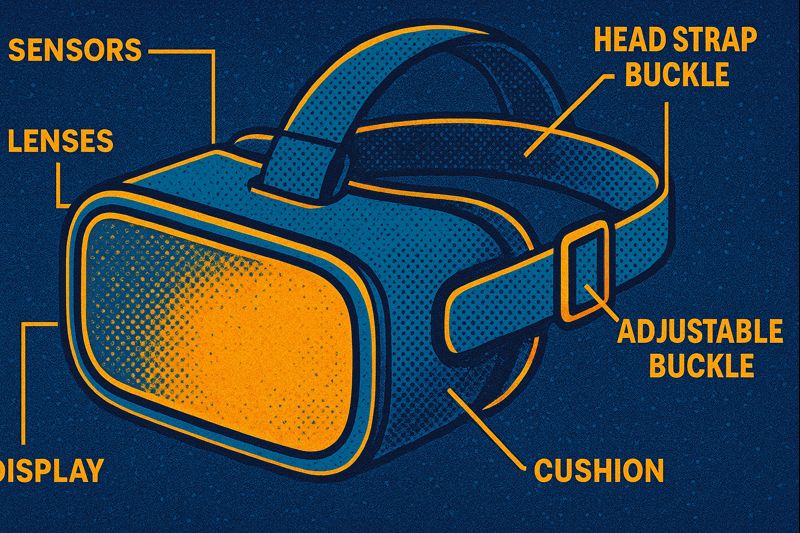
Key features include display screens, motion sensors, and audio output. Together, they help create the illusion of presence. Comfort and usability also matter, especially for long sessions.
List of Key Components or Aspects:
- High-resolution displays for clear visuals
- Motion tracking sensors to follow head movement
- Lenses that create depth and field of view
- Built-in or connected audio systems
- Controllers or hand-tracking support
These components allow users to interact naturally with virtual environments. As technology improves, newer models continue to refine performance and comfort.
History of VR Headset
The concept behind a VR Headset dates back several decades. Early experiments focused on flight simulators and research tools rather than consumer products. During the 1960s, basic head-mounted displays introduced the idea of immersive viewing, though the technology was limited.
In the 1990s, developers attempted to bring virtual reality to gaming. However, high costs and technical limits slowed adoption. Progress resumed in the 2010s when better displays and processors became available. Since then, modern devices have supported entertainment, training, and social interaction within virtual spaces.
| Year | Milestone |
|---|---|
| 1968 | First head-mounted display prototype |
| 1990s | Early consumer and arcade experiments |
| 2010s | Commercial revival with improved hardware |
| 2020s | Integration with Metaverse platforms |
Types of VR Headset
Different types of VR Headset designs serve different needs. Some focus on mobility, while others prioritize performance. Understanding these categories helps users choose the right device.
Standalone headsets operate without external hardware. They include built-in processors and storage, making them easy to use. Tethered headsets connect to a computer or console. These models offer higher visual quality and advanced experiences. Mobile-based headsets rely on smartphones for display and processing. Although simple, they provide limited immersion.
Each type works on the same principle but differs in power, cost, and setup. As virtual platforms expand, these options continue to evolve to meet user demands.
How Does VR Headset Work?
A VR Headset works by combining visual display, motion tracking, and software rendering. First, the device shows two slightly different images, one for each eye. This creates a sense of depth.
Next, sensors track head movement in real time. When the user turns or tilts their head, the system updates the visuals instantly. This response maintains immersion and reduces discomfort. Audio cues often adjust as well, reinforcing realism.
Finally, input devices allow interaction. Users can select objects, move through spaces, or communicate with others. Through this process, the device delivers a smooth and engaging virtual experience.
Pros and Cons of VR Headset
A VR Headset offers strong advantages but also comes with limitations. Understanding both sides helps users set realistic expectations.
| Pros | Cons |
|---|---|
| High immersion and realism | Can cause motion discomfort |
| Enhances learning and training | Equipment cost may be high |
| Supports remote interaction | Requires physical space |
Applications or Uses of VR Headset
A VR Headset supports many real-world applications across industries. In gaming, it delivers immersive entertainment experiences. In education, it helps learners practice skills in safe environments.
Training and Education
Organizations use virtual simulations to teach procedures and build Digital skills.
Social and Virtual Worlds
Users meet, collaborate, and attend events inside shared virtual spaces.
Healthcare and Design
Professionals apply immersive tools for therapy, planning, and visualization.
These uses show how the technology extends beyond entertainment into practical fields.
Resources
- Robots.net. What is a VR Headset?
- Explore Insiders. Ultimate Guide to VR Headsets
- Interaction Design. VR Headsets
- PC Parts Geek. VR Headset
- Tech Career. VR Headset