

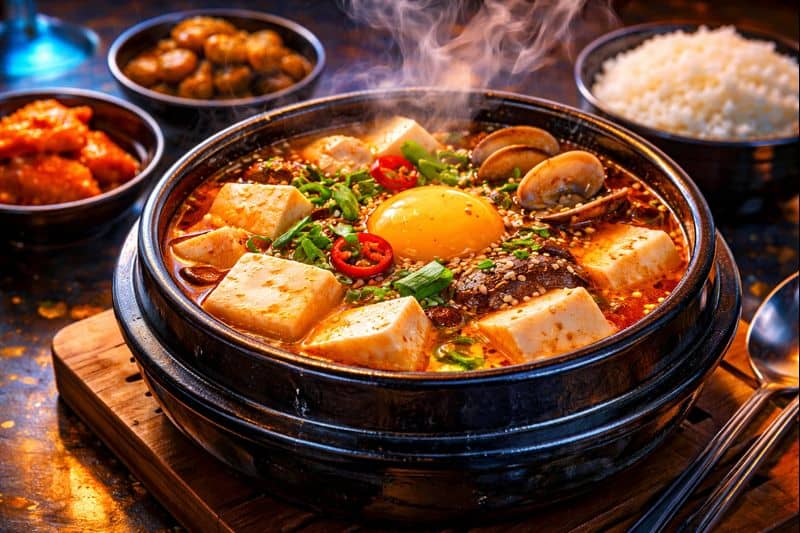
A Sundubu Jjigae Recipe is one of the most recognizable comfort dishes in Korea. This bubbling soft tofu stew is known for its deep red broth, silky texture, and warming spice. It often arrives at the table still boiling, filling the room with a savory aroma that signals a satisfying meal ahead. While it looks bold and complex, the cooking process itself is simple and forgiving. That makes it ideal for home cooks who want authentic flavor without complicated techniques.
This tutorial is useful because it breaks the dish down into clear, manageable steps. Each stage explains what to do, why it matters, and what results to expect. Instead of rushing, the recipe focuses on building flavor gradually. That approach reflects Korean Culture, where cooking emphasizes balance, patience, and care.
Sundubu jjigae is also flexible. Families adjust it based on ingredients they have on hand, which aligns with long-standing Traditions of practical home cooking. The goal of this guide is to help you cook a reliable, flavorful stew while understanding the cultural logic behind it. By the end, you will feel confident making this classic example of korean food in your own kitchen.
Things Needed
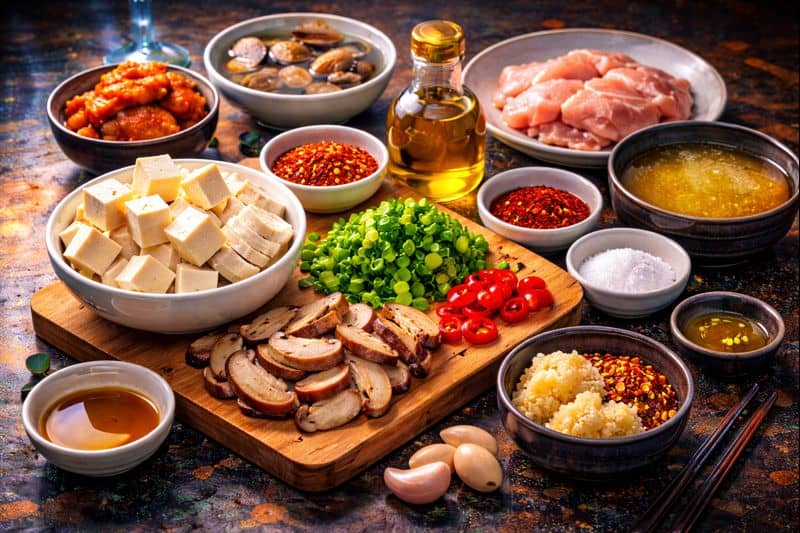
Proper preparation makes a big difference when cooking a Sundubu Jjigae Recipe. The stew cooks quickly once heat is applied, so having everything ready helps maintain control and prevents burning. The ingredients are simple, yet each one plays a clear role in flavor and texture.
Ingredients:
- Soft tofu (sundubu), kept cold until use for structure
- Gochugaru, which provides heat and color
- Gochujang, optional but helpful for depth
- Sesame oil for aroma and richness
- Garlic, finely minced for even flavor release
- Onion, thinly sliced to add sweetness
- Protein of choice such as pork belly, beef slices, clams, shrimp, or mushrooms
- Anchovy-kelp stock for authentic savoriness, or water if needed
- Soup soy sauce or light soy sauce for seasoning
- One fresh egg for richness
- Green onions, chopped for freshness
Tools:
- Korean earthenware pot or small heavy saucepan
- Wooden spoon to avoid damaging the pot
- Knife and cutting board
These tools and ingredients reflect everyday home kitchens rather than restaurant setups. That simplicity is part of the dish’s appeal and long-standing Traditions.
Step-by-Step Instructions
Step 1: Heat the Oil and Aromatics
Place your pot over medium heat. Add sesame oil, then sliced onions. Stir slowly for two to three minutes until the onions soften and turn slightly translucent. This step releases sweetness and creates a gentle base aroma. Keep the heat moderate, as sesame oil burns easily and can turn bitter.
Step 2: Bloom the Garlic and Chili Flakes
Lower the heat slightly before adding minced garlic and gochugaru. Stir constantly for 20 to 30 seconds. The oil should turn a vibrant red and smell fragrant, not sharp. If the mixture darkens too quickly, lift the pot briefly from the heat. This controlled blooming is essential for balanced spice.
Step 3: Add and Cook the Protein
Add your chosen protein next. Pork belly or beef should cook for about three minutes until lightly browned. Seafood needs less time and should turn just opaque. This step allows the protein to flavor the oil without fully cooking it yet.
Step 4: Pour in the Stock
Carefully add the anchovy-kelp stock. Increase heat to medium-high and bring the stew to a gentle boil. Stir once to loosen any bits from the bottom of the pot. The broth should look rich, red, and slightly cloudy.
Step 5: Season the Broth
Add soup soy sauce and a small amount of gochujang if using. Stir well and taste. The flavor should be savory with noticeable heat but not overly salty. Adjust gradually, since seasoning concentrates as the stew simmers. Balance matters more than intensity in a proper Sundubu Jjigae Recipe.
Step 6: Add the Soft Tofu
Scoop the soft tofu directly into the pot. Use your spoon to break it into large, uneven chunks. Simmer gently for five to seven minutes. The tofu absorbs flavor while keeping its delicate texture. Avoid stirring too often, which can break it down too much.
Step 7: Crack in the Egg
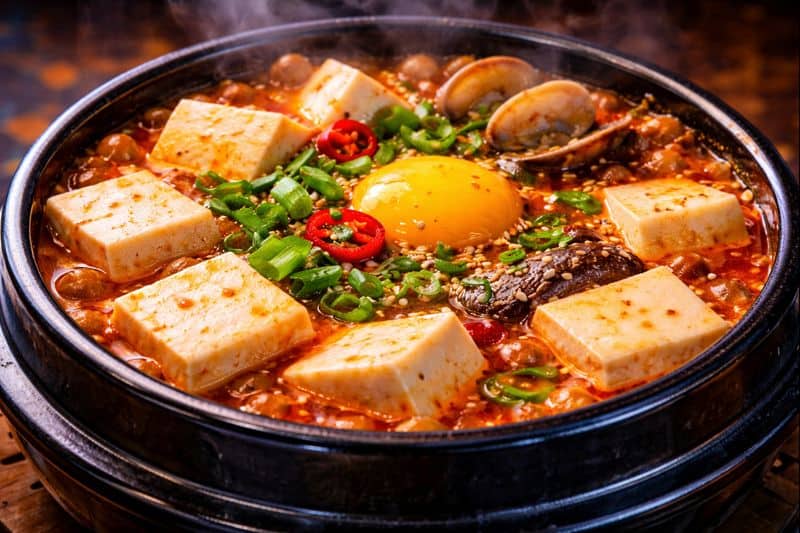
Lower the heat to medium. Crack an egg directly into the center of the stew. Let it cook undisturbed for one to two minutes. The white should set while the yolk remains slightly runny. This step adds richness and softens the spice level.
Step 8: Garnish and Serve Immediately
Sprinkle chopped green onions over the top. Serve the stew while it is still bubbling. Fun Facts often point out that sundubu jjigae is traditionally served actively boiling, which enhances both aroma and comfort.
Tips and Warnings
| Tip or Warning | Explanation |
|---|---|
| Use true soft tofu | Firm tofu changes the stew’s signature texture |
| Control heat carefully | Burnt chili flakes create bitterness |
| Season in stages | Saltiness increases as broth reduces |
| Avoid over-stirring | Gentle movement protects tofu texture |
| Serve right away | Flavor and consistency decline as it cool |
Conclusion
By following this guide, you have completed a full Sundubu Jjigae Recipe using methods rooted in authentic home cooking. You learned how to layer aromatics, bloom spices without burning them, and protect the delicate texture of soft tofu. These skills apply to many Korean stews, making this dish a strong foundation for further exploration.
Beyond technique, this recipe offers a cultural experience. It reflects Korean Culture through its focus on warmth, balance, and adaptability. Each pot can change based on season, preference, or available ingredients, yet still feel familiar. You can now experiment with seafood, vegetarian options, or adjusted spice levels while keeping the core method intact. Share your results, cook it again, and enjoy how one simple stew delivers comfort, flavor, and tradition in every spoonful.
Resources
- Maangchi: How to Make Sundubu-jjigae (Soft Tofu Stew)
- Korean Bapsang: Authentic Korean Sundubu-jjigae Recipe
- Seonkyoung Longest: Korean Soft Tofu Stew Tutorial
- My Korean Kitchen: Spicy Sundubu-jjigae Recipe Guide
- Serious Eats: The Science Behind Korean Stews and Sundubu-jjigae