
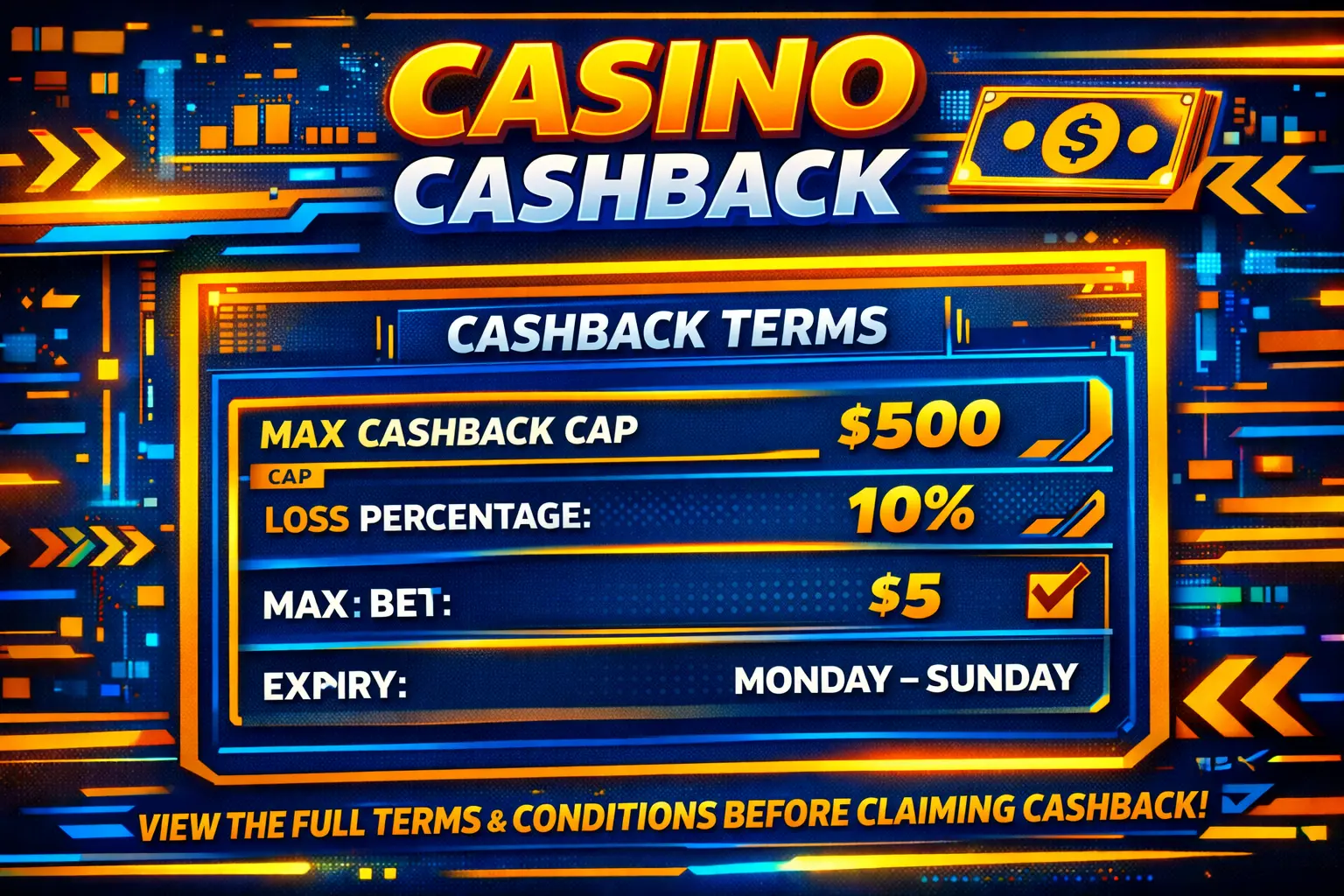
Casino site cashback is a casino promotion that returns a portion of eligible net losses or spending to a player’s account, usually under conditions such as time windows, caps, exclusions, and payout restrictions.
Key Takeaways
- Cashback usually applies to a defined period such as daily, weekly, or monthly.
- Eligibility may exclude certain games, bet types, locations, or account states.
- A high percentage can still deliver low value if the cap is small.
- Cashback may be credited as cash or as bonus funds with additional conditions.
- Reading the full terms is the main way to reduce misinterpretation.
Definition
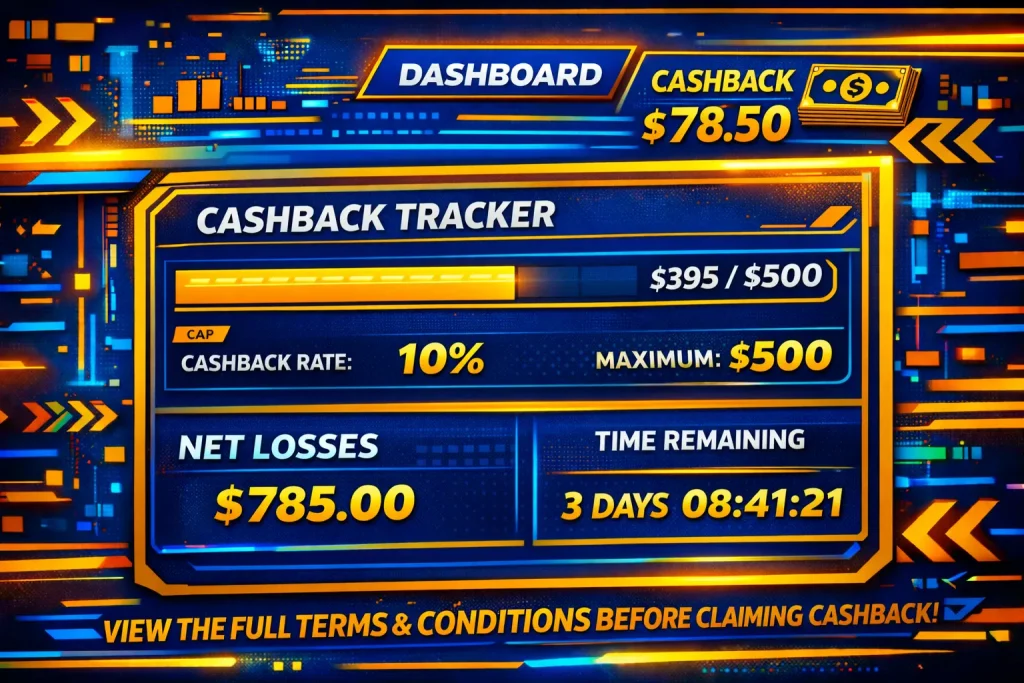
Casino site cashback is a conditional refund mechanism where a platform credits a percentage of qualifying net losses (or, in some offers, qualifying spend) back to a user’s account according to published rules. The term “cashback” can be misleading because it does not always mean withdrawable cash. Some operators credit it as non-cash promotional balance, which can carry restrictions.
Most cashback schemes define several core elements: (1) the measurement period (for example, a week), (2) the activity base used in the calculation (commonly net losses), (3) the percentage rate, and (4) limiting rules such as caps and exclusions. In addition, the terms often specify how the platform treats bonuses, free spins, and promotional credits when calculating net results. This matters because a user can see a different cashback outcome depending on which balances they used and which games they played during the period.
What Casino Site Cashback means / How it works
Casino site cashback works by calculating an amount based on a specified formula over a defined time window, then crediting the result to the user’s account. The platform’s terms determine what counts as “qualifying” activity and how the calculation is performed. Because casinos implement cashback through internal tracking systems, the most accurate interpretation is the one stated in the offer’s rules, even if a user expects a simpler calculation.
Typical components include:
- Time window: Cashback commonly resets on a schedule, for example daily, weekly, or monthly. The exact start and end times can affect eligibility. Some platforms use a fixed calendar window, while others use a rolling window tied to account activity.
- Calculation basis: Many offers use net losses (losses minus wins) for the period. Others may treat the base differently, for example by excluding certain wins, excluding certain bonuses, or applying separate accounting for promotional balances. If the terms are vague, the precise method may only be inferable from how the platform credits cashback.
- Percentage rate: The advertised cashback rate applies to the qualifying base, but it may not apply uniformly across all activity. A platform may apply a higher rate only to certain tiers or only after reaching a threshold.
- Caps and thresholds: Many offers set a maximum cashback amount per period, which can limit the practical value even when the rate is high. Some offers also require a minimum qualifying amount before cashback triggers, which can exclude low-volume activity.
- Exclusions and contribution rules: Certain games, bet types, or activity categories may be excluded. Some platforms also apply contribution rules that count some games fully and others partially toward the qualifying base. This can lead to lower cashback than a simple percentage estimate.
- Credit form and restrictions: Cashback may be credited as cash balance or as bonus credit. If it credits as bonus credit, additional rules can apply, such as wagering requirements, maximum bet limits, or expiry periods. Even when credited as cash, some platforms still apply limits if the account has unresolved verification or policy flags.
Operationally, cashback credits may appear automatically at the end of the period or may require manual claiming within the account interface. Terms may also state whether cashback applies per player, per household, or per account, which matters in shared environments. Record-keeping helps readers verify what the platform credited and why, especially when different balances or game types were used in the same window.
For more foundational details, refer to the comprehensive overview of casino site structures.
Why Casino Site Cashback matters
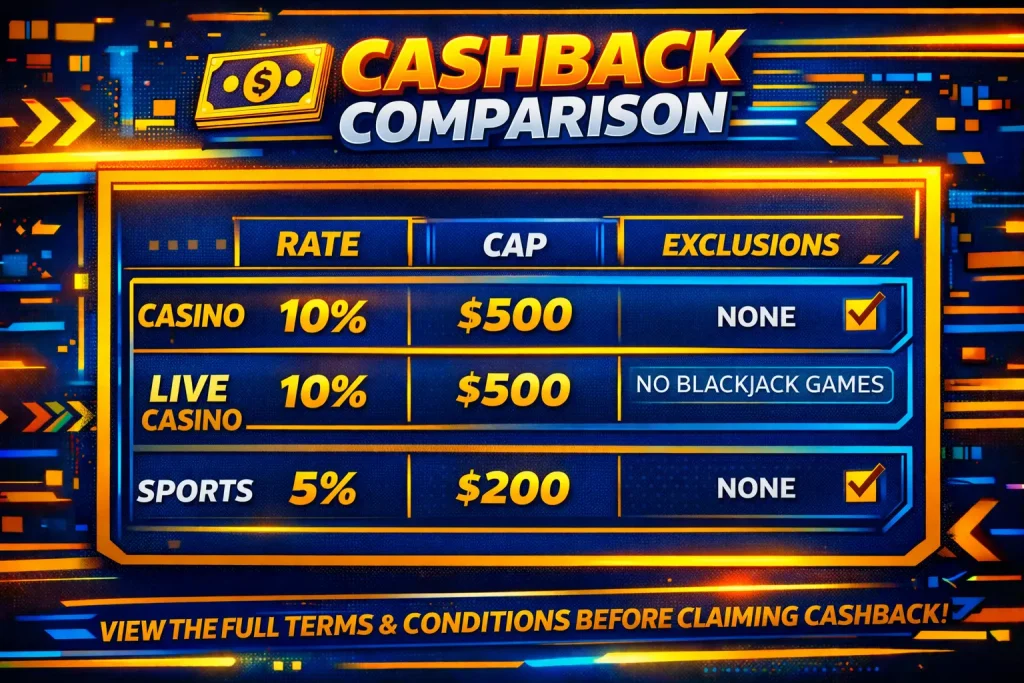
Casino site cashback matters because it can change the effective cost of gambling during a defined period by returning part of eligible losses. However, the practical benefit depends on terms that can reduce, delay, or restrict the credited value. For educational readers, the key point is that cashback is a structured rule set, not a universal guarantee.
Several factors influence real-world impact:
Predictability
Cashback can look simple, yet exclusions and caps often shape the result more than the headline rate. Understanding the cap helps estimate an upper bound on value.
Comparability
Two cashback offers are hard to compare without matching the same elements, such as the window length, the base definition, and whether the credit arrives as cash or bonus funds.
Decision pressure
Time windows and thresholds can create urgency, which may affect user behavior. This does not change gambling’s underlying risk, but it can influence session length and frequency.
Dispute avoidance
Clear terms and visible tracking reduce confusion when credited amounts differ from expectations. Where tracking is limited, screenshots and logs help users reconcile outcomes.
Payment and transaction context
Some operators restrict promotions by payment method. If users handle Digital Currency via a Crypto wallet or a Crypto Account, they may also face network fees and confirmation times on Blockchain rails. These costs can affect a user’s net position even if the cashback formula only references gambling results. Users who conduct Trading between tokens before deposits may also incur conversion fees, which can change the perceived value of cashback.
Light Support Block
Mini-checklist for evaluating casino site cashback
- Confirm the time window and the exact reset schedule used in the terms.
- Identify the calculation basis (for example, net losses) exactly as defined.
- Check the cashback rate, caps, and any minimum thresholds.
- Review excluded games or categories and any contribution rules.
- Verify whether cashback credits as cash or bonus funds, then note added restrictions.
Common mistakes / misconceptions
- Assuming cashback applies to all games: Many offers exclude certain categories or apply different contribution rules.
- Treating the headline percentage as the final value: Caps, thresholds, and exclusions can reduce the credited amount substantially.
- Ignoring the credit form: Cashback credited as bonus funds can carry conditions such as wagering or expiry limits.
- Missing time boundaries: Activity outside the defined window may not count, even if it occurred close to the reset time.
- Assuming lower credits are always errors: A lower-than-expected credit often results from the stated base definition, exclusions, or caps.
- Overlooking account status conditions: Some offers depend on account verification, location eligibility, or compliance with specific rules.
Examples
- A cashback offer with a high percentage but a low maximum cap may yield a small refund despite sizable qualifying losses.
- Cashback credited as bonus funds may require additional wagering before any resulting winnings can become withdrawable, depending on the operator’s rules.
- Two users with similar losses can receive different cashback if they played different game categories with different eligibility or contribution rules.
FAQ
Is casino site cashback guaranteed each period?
No. Eligibility depends on published terms such as time windows, caps, exclusions, and thresholds.
Does cashback usually arrive as withdrawable cash?
Not always. Some offers credit cash balance, while others credit bonus funds with restrictions defined in the terms.
Why is the cashback amount lower than expected?
Exclusions, caps, thresholds, contribution rules, or the operator’s calculation method can reduce the credited amount compared with a simple percentage estimate.
Resources
- UK Gambling Commission. Gambling businesses and operators
- Malta Gaming Authority. Players hub and guidance
- BeGambleAware. Safer gambling advice and tools
- Investopedia. Understanding wagering requirements
- Federal Trade Commission. How to spot and avoid online scams