
Quick Answer
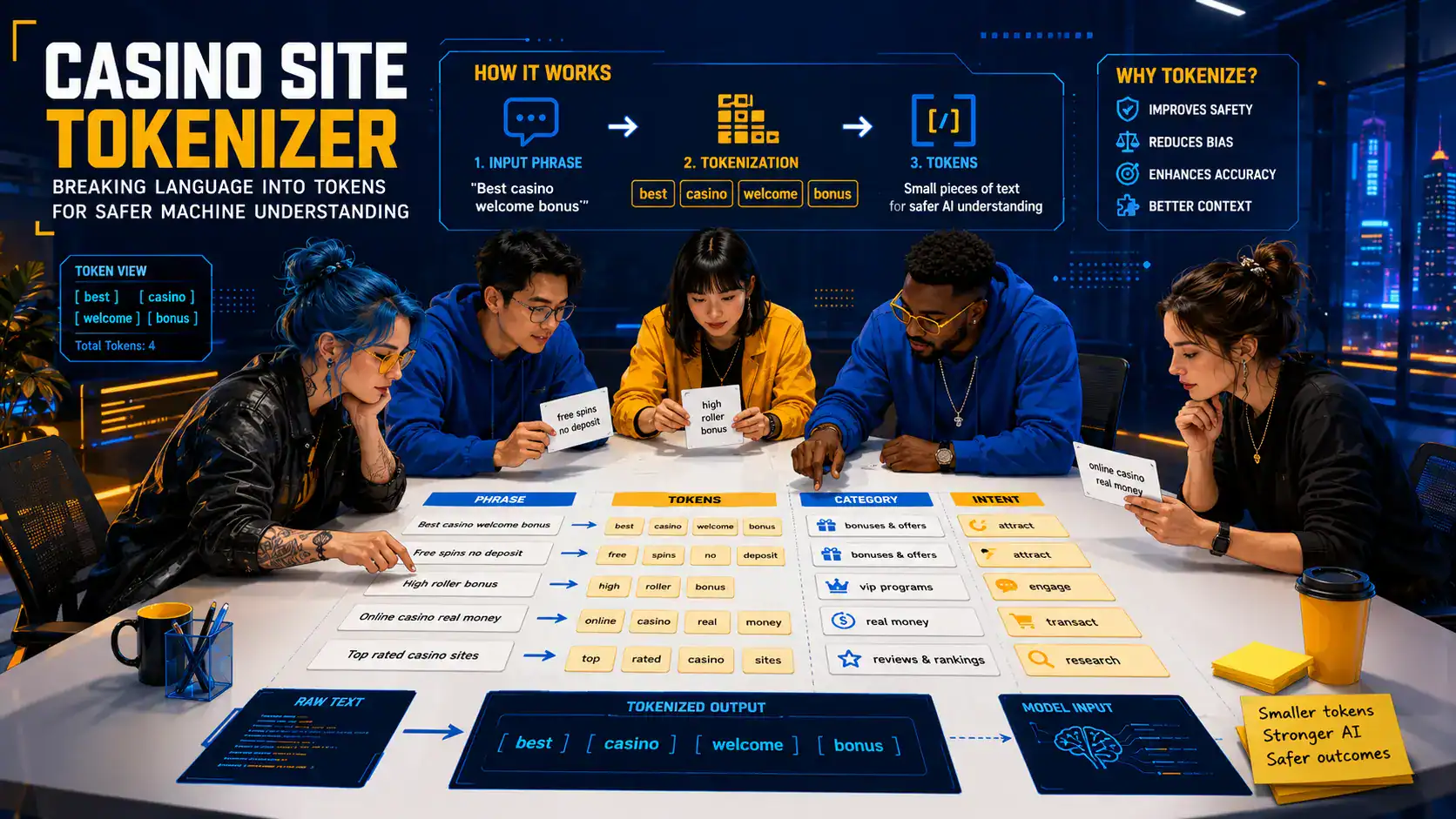
A Casino Site Tokenizer is a data-processing tool that breaks casino-site text or related digital data into smaller units called tokens so AI systems can read, classify, protect, or analyze the information more efficiently.
In Artificial Intelligence, Casino Site Tokenizer mainly supports text understanding, data preparation, privacy protection, search improvement, and risk analysis. It does not operate a casino site or recommend gambling activity. It is best understood as a technical concept within AI and data processing.
Key Takeaways
- Casino Site Tokenizer converts casino-related text or data into smaller token units.
- AI models use these tokens to process content more accurately.
- It may support privacy, fraud detection, search, customer support, and analytics.
- The term can refer to language tokenization, security tokenization, or both.
- It is an educational AI concept, not a casino product or promotional tool.
Definition of Casino Site Tokenizer
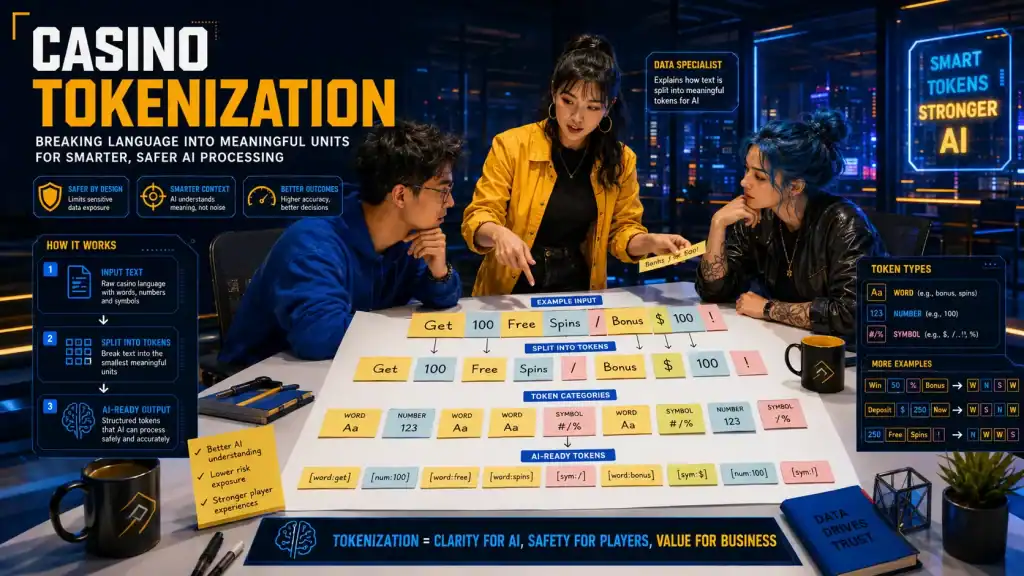
Casino Site Tokenizer is a system that separates casino-site content, such as rules, support messages, transaction labels, search queries, or account-related text, into tokens for computer systems and AI models.
A token may be a word, part of a word, number, symbol, or protected data reference. This process helps artificial intelligence tools interpret casino-related information without always relying on raw text. In a glossary or knowledge-base context, the term explains how casino-related data becomes easier for software to read and organize.
The phrase can also describe more than one technical function. In natural language processing, it prepares written content for model analysis. In data-security workflows, it may replace sensitive values with safer substitutes. Both uses share the same basic idea: the system changes complex or sensitive input into smaller, more manageable units.
What Casino Site Tokenizer means / How it works
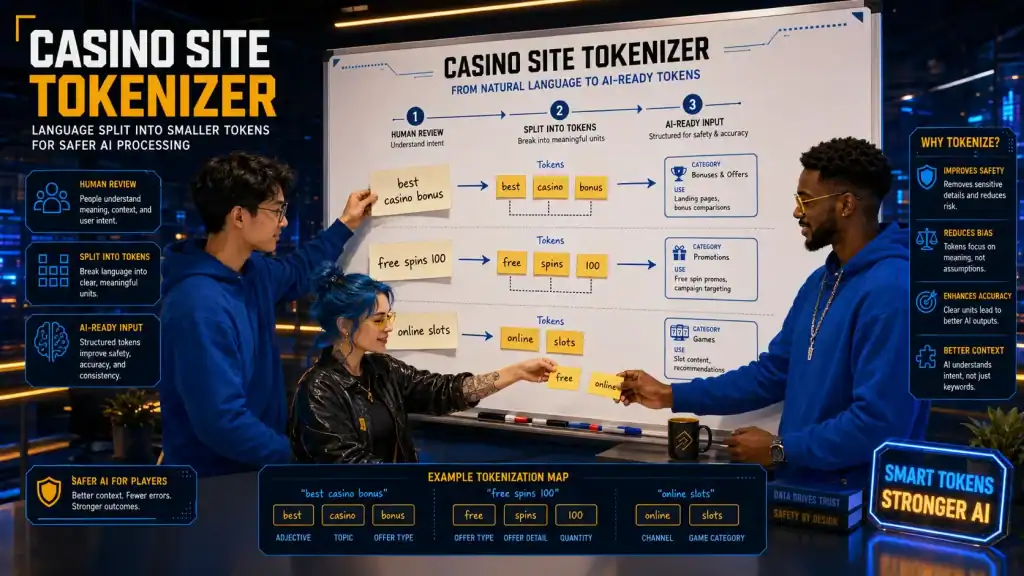
Casino Site Tokenizer means applying tokenization to casino-site data in an AI or data-security context. The process usually begins when a system receives text or structured information from a casino-related platform.
The system then cleans and separates the input into smaller parts. For example, a sentence in a help message may become individual words or subword units. A payment reference or account identifier may become a protected token instead of exposing the original value.
AI models can then use those tokens to detect meaning, classify a message, improve search results, or identify unusual patterns. This makes the information easier for computer systems to process. It also reduces ambiguity because the system can treat repeated terms, numbers, or symbols in a more consistent way.
In practice, tokenization often happens before analysis, not after it. The tokenizer does not usually make the final decision. Instead, it prepares the input so another system, such as a search engine, classifier, chatbot, fraud model, or analytics tool, can use the data more reliably.
A simple process looks like this:
- The system receives casino-site text or data.
- It removes unnecessary formatting or unsupported characters.
- It splits the content into tokens.
- It converts those tokens into a machine-readable form.
- An AI model or security system uses the tokens for analysis, classification, or protection.
For broader context on the related casino-site concept, see this educational guide to a casino site.
Why Casino Site Tokenizer matters
Casino Site Tokenizer matters because casino-related platforms can produce large amounts of mixed data. This data may include game descriptions, user questions, rules, numbers, symbols, and account-related information.
Tokenization helps AI systems handle that data in a structured way. It can improve how intelligence tools understand user intent, how search systems match content, and how risk-detection systems review repeated patterns. It also helps technical teams separate useful signals from raw, unorganized input.
The concept is especially relevant when text contains inconsistent formatting, abbreviations, currencies, usernames, promotional terms, or multilingual content. Without tokenization, a system may process this information less accurately. With tokenization, the same information can be prepared in a format that supports clearer analysis.
It can also support privacy when security tokenization replaces sensitive information with safer token values. However, the exact function depends on how the system is designed. A tokenizer used for language processing is not always the same as a tokenizer used for data protection.
Quick-Reference Table
| Area | What Casino Site Tokenizer Does |
|---|---|
| AI text processing | Breaks text into tokens for model analysis. |
| Search | Helps match user queries with relevant content. |
| Support systems | Helps chatbots or help tools understand messages. |
| Risk analysis | Helps detect repeated or unusual data patterns. |
| Privacy | May replace sensitive values with protected tokens. |
Common mistakes / misconceptions

A common mistake is thinking Casino Site Tokenizer is a gambling tool. It is not. The term describes a technical process related to AI, language processing, or data protection.
Another misconception is that all tokenizers protect private data. Some tokenizers only prepare text for AI models. Others replace sensitive data with secure references. The purpose depends on the implementation.
Some readers also confuse tokenization with encryption. These are different methods. Tokenization replaces data with a token, while encryption transforms data using a cryptographic method that can be reversed with a key.
It is also inaccurate to assume one tokenizer works perfectly for every casino-related dataset. Text that includes currencies, usernames, game titles, symbols, or multilingual content may need specific token rules.
Examples
A customer support message about a failed withdrawal may be split into tokens so an AI system can classify it as a payment-related issue.
A search query for a table game may be tokenized so the site can return more relevant help content or game information.
A transaction identifier may be replaced with a token so internal systems can process a record without exposing the original sensitive value.
An informational page about Woori Casino, such as this Woori Casino reference, may contain text that a tokenizer could process for search, classification, or content analysis. This is a technical example only, not a recommendation.
FAQ
Is Casino Site Tokenizer part of Artificial Intelligence?
Yes. It can be part of AI data preparation, especially when casino-related text needs to be processed by natural language models or classification systems.
Is Casino Site Tokenizer the same as Gen AI?
No. Gen AI may use tokenized text, but a tokenizer itself is only one processing component. It prepares data so AI models can interpret it.
Can Casino Site Tokenizer work with computer systems outside AI?
Yes. Tokenization can also support security, databases, analytics, and compliance workflows in computer systems.